
Hydraulic Clutch Control — Clutch Master Cylinder
CL-6parts diagramClutch Master Cylinder
Parts DiagramFig. fig1
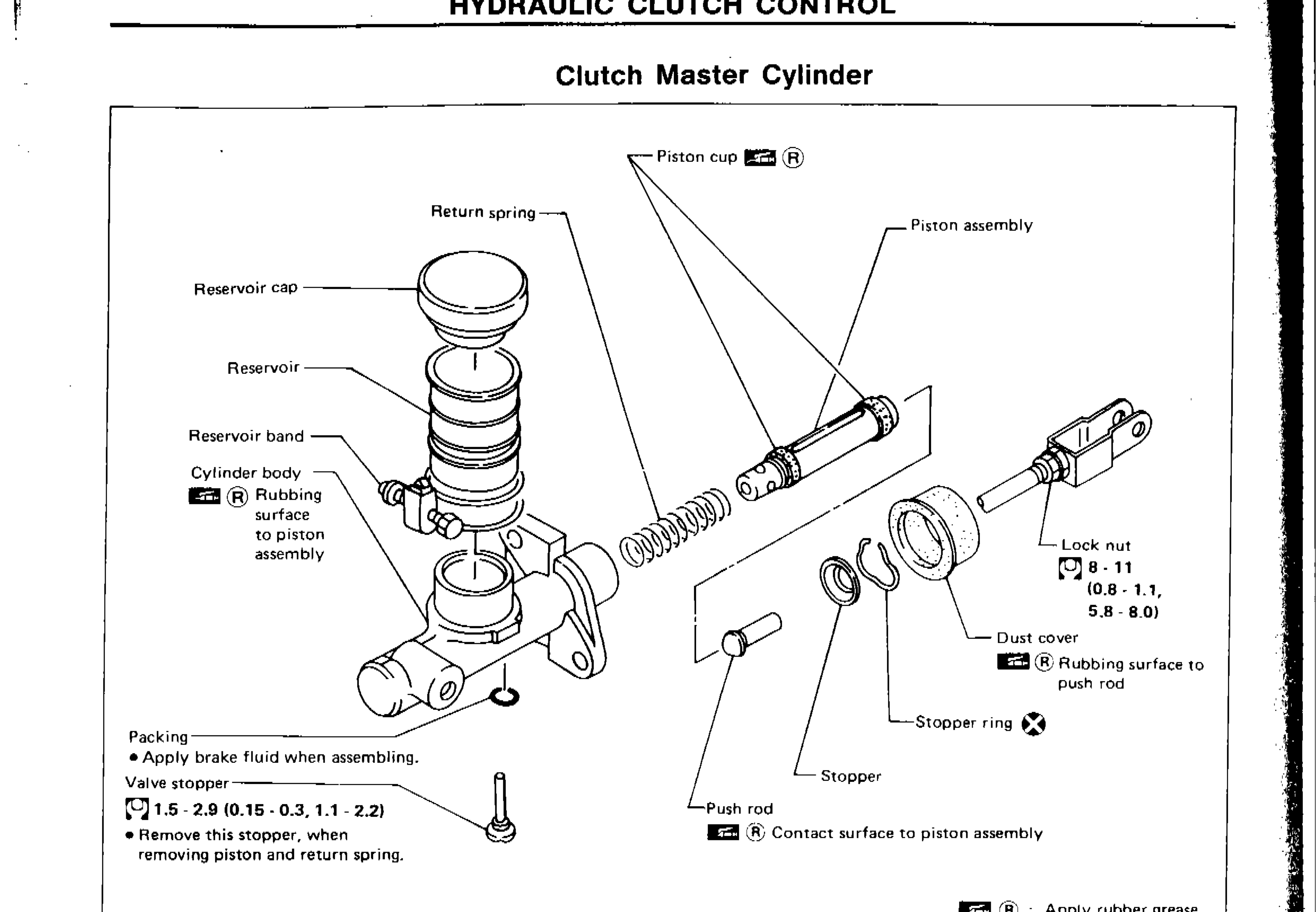
| Specification | Value |
|---|---|
| Valve stopper | 1.5 - 2.9N·m |
| Lock nut | 8 - 11N·m |
Valve stopper
1.5 - 2.9N·m
Lock nut
8 - 11N·m
DISASSEMBLY AND ASSEMBLY
Clutch Master Cylinder Disassembly and Assembly
- 1Push piston into cylinder body with screwdriver when removing and installing valve stopper.
- 2Align groove of piston assembly and valve stopper when installing valve stopper.
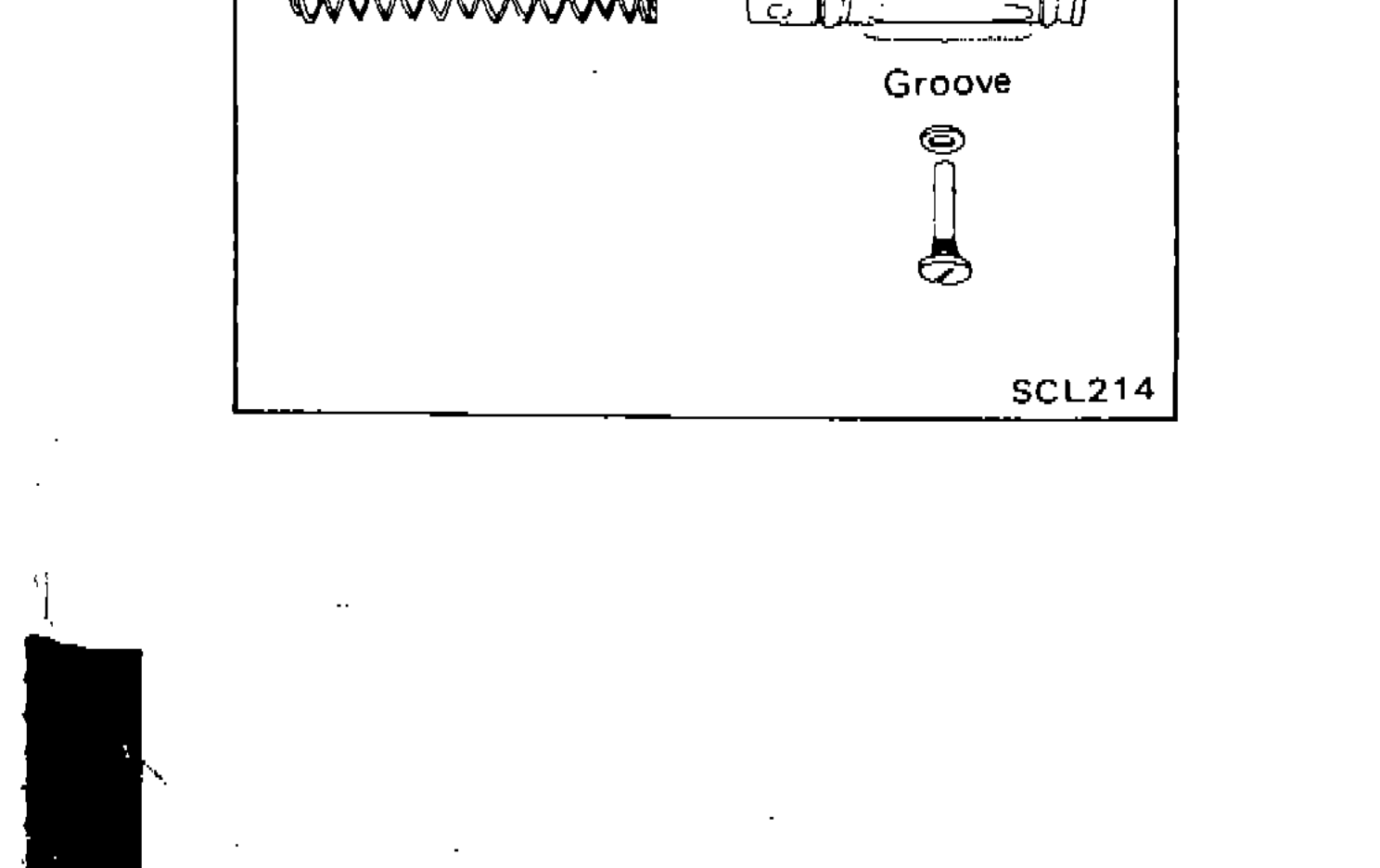 SCL214
 - 3Check direction of piston cups.
NOTE
Apply rubber grease (R) to: cylinder body rubbing surface to piston assembly; piston cup; dust cover rubbing surface to push rod; push rod contact surface to piston assembly.
Apply brake fluid when assembling packing.
Remove valve stopper when removing piston and return spring.